


Phu Quoc Prison and Ho Quoc Pagoda: A Cultural Day Out
 phongthuy.vn
 08/11/2026
Most people come to Phu Quoc for sand and sea, yet the south of the island holds two places that tell a deeper story. One is a wartime prison that keeps the memory of decades of suffering. The other is a Zen monastery on a hillside, built to pray for peace and for those who work at sea.This guide explains what to see at each site, how to plan the route, what to wear and how to behave with respect.1. Why Pair These Two Sites in One DayBoth sites sit in the south of Phu Quoc, so a single loop
Most people come to Phu Quoc for sand and sea, yet the south of the island holds two places that tell a deeper story. One is a wartime prison that keeps the memory of decades of suffering. The other is a Zen monastery on a hillside, built to pray for peace and for those who work at sea.
This guide explains what to see at each site, how to plan the route, what to wear and how to behave with respect.
1. Why Pair These Two Sites in One Day
Both sites sit in the south of Phu Quoc, so a single loop by car or scooter covers them without backtracking. The contrast is the point: in the morning you face a hard chapter of Vietnamese history, and in the late afternoon you sit in a monastery that looks out over calm water.
A simple plan for the day:
- Morning: the prison, while the air is cooler and the morning session is open.
- Midday: a seafood lunch in An Thoi town and a rest out of the sun.
- Afternoon: a swim at Sao Beach or Khem Beach, both on the southern coast.
- Late afternoon: the pagoda, for soft light over the sea and fewer visitors.
2. Phu Quoc Prison: Walking Through History
Known locally as Nha Tu Phu Quoc and often called the Coconut Tree Prison, phu quoc prison stands on Nguyen Van Cu Street in An Thoi, near the southern tip of the island. French forces opened the first camp here in the early 1950s, and by 1954 it held close to 14,000 prisoners. During the Vietnam War the camp was rebuilt on a much larger scale. Around 40,000 prisoners passed through the camp, and about 4,000 of them died there.
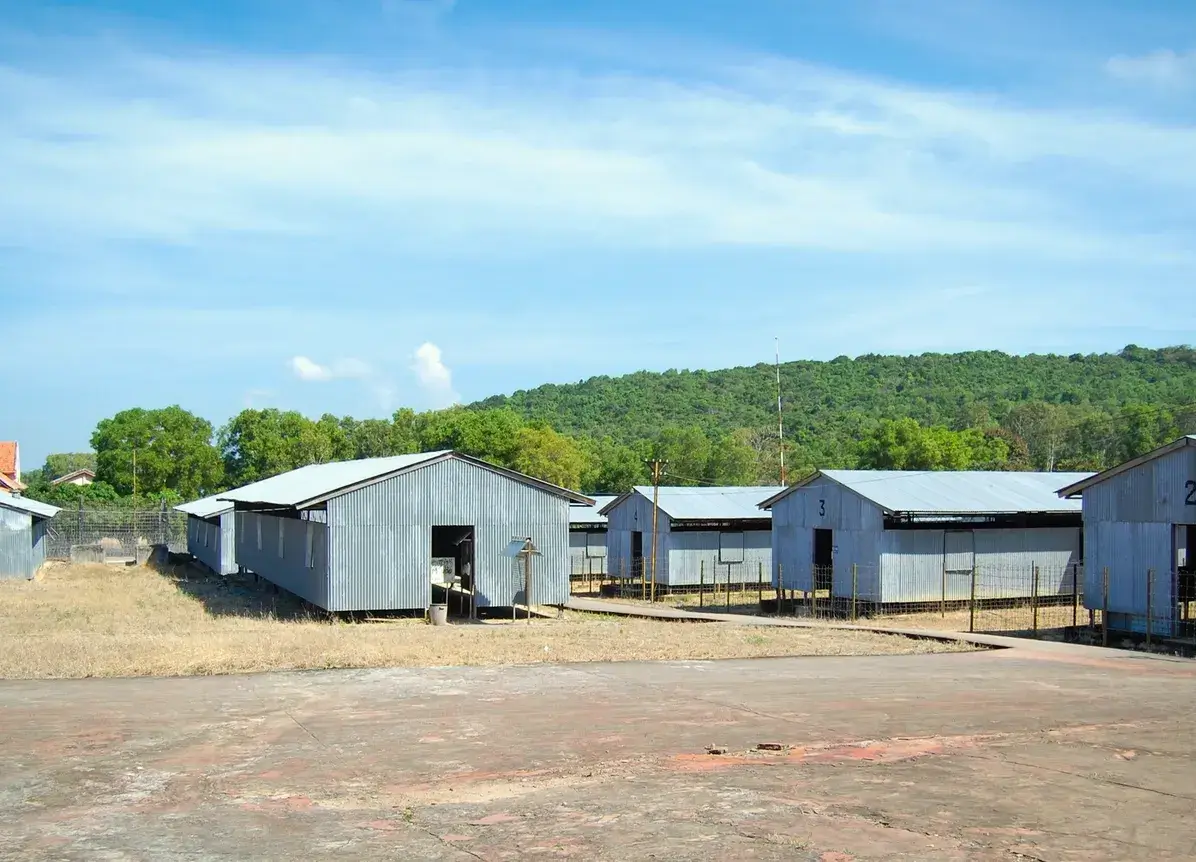
Rebuilt barracks at Phu Quoc Prison, where prisoners were held behind wire fences
The state ranked the site a Special National Historical Relic in 2014. Today it works as an open-air museum, and the main areas to see are:
- Barracks and fences: rows of reconstructed huts behind layers of barbed wire and watchtowers.
- Zone B2 exhibits: life-size figures reenact the torture methods described by former prisoners. The scenes are graphic, so parents may want to look first before bringing young children.
- Exhibition house: photos and objects trace the camp from the French period to its closure in 1973.
- Martyrs memorial: a monument shaped like two rising waves, where visitors light incense for those who died.
Entry is free. The site opens daily in two sessions, from 8:30 to 11:30 and from 13:30 to 17:00; hours can change on holidays, so check on arrival. Allow 1.5 to 2 hours.
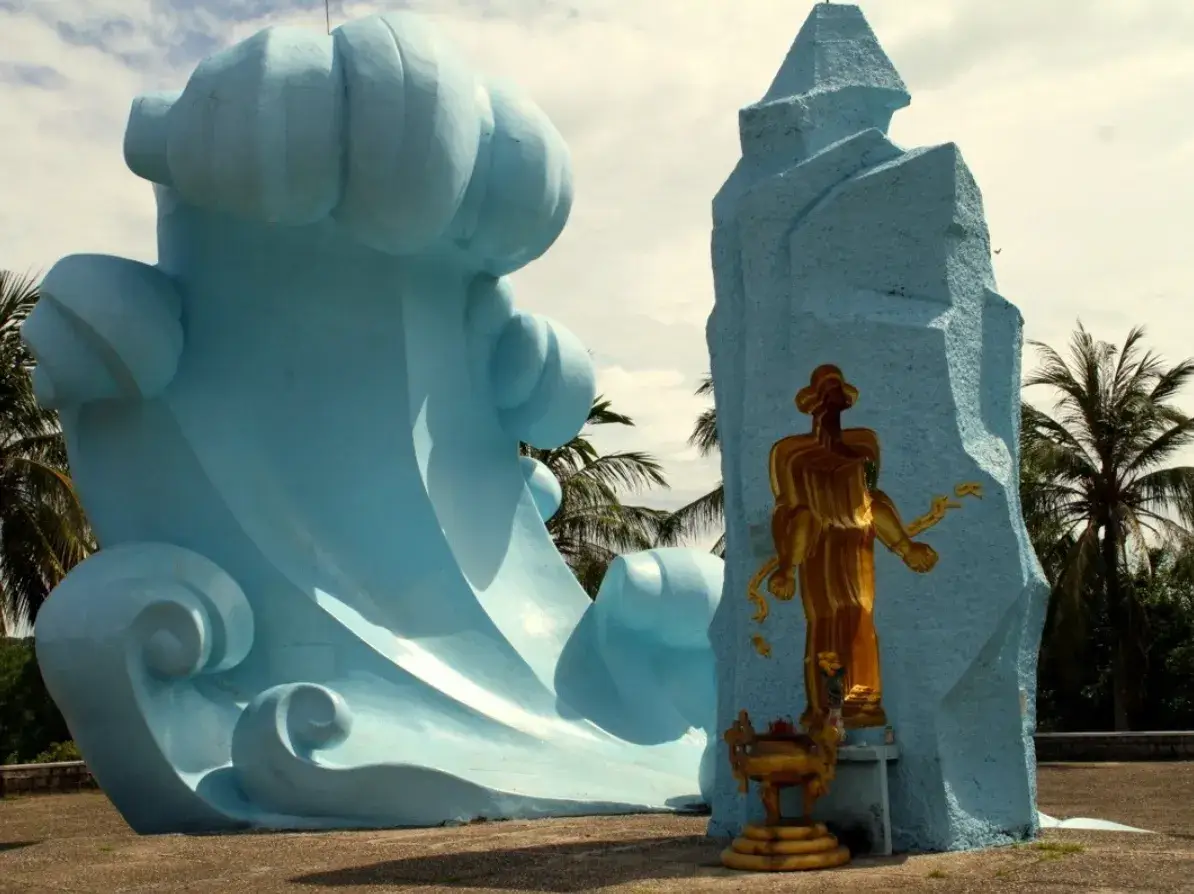
A monument at Phu Quoc Prison showing a figure rising between waves, a symbol of the prisoners’ endurance
3. Ho Quoc Pagoda: Calm Above the Sea
Officially named Truc Lam Ho Quoc Monastery, ho quoc pagoda stands on a hillside in the Duong To area on the southeast coast, about 10 km from Phu Quoc International Airport. Work began in October 2011, and the monastery was inaugurated in December 2012. Its name means “protecting the nation”, a fitting idea for a temple that faces the sea at the country’s southwestern edge.
Take your time with these parts of the complex:
- Tam Quan gate: a three-entrance gate in the Ly and Tran dynasty style, carved with dragons and lotus motifs.
- Dragon staircase: a stone stairway with dragon balustrades that leads up to the main hall.
- Great Hall: known as Dai Hung Bao Dien, with ironwood pillars and a tiered, curved roof.
- Quan Am statue: a white statue of the Bodhisattva of Compassion facing the ocean, where local fishermen pray for safe voyages.
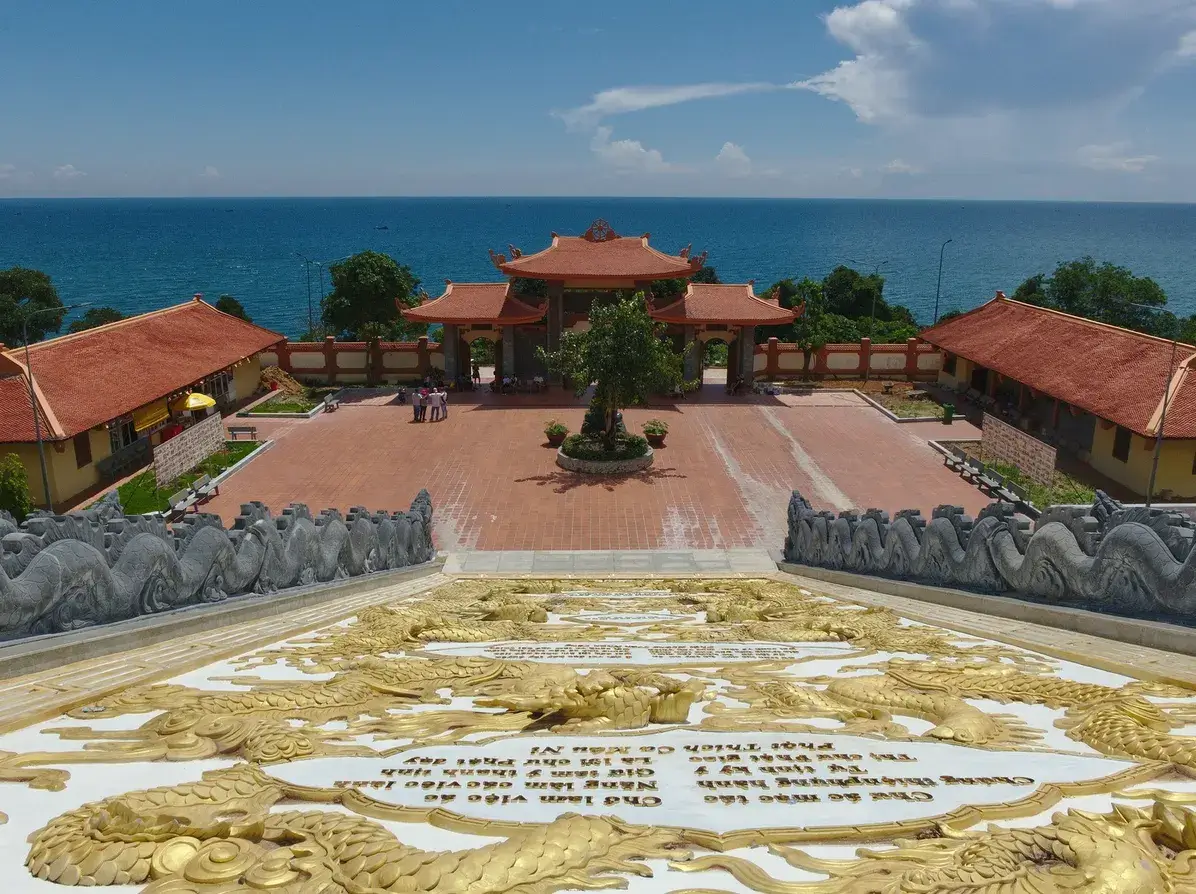
The main courtyard of Ho Quoc Pagoda, with the sea stretching out beyond its roofs
Entry is free, and the grounds open from about 6:00 to 18:00. Sunrise brings cool air and a quiet courtyard, while the hour before sunset turns the sea gold behind the roofs. Plan about an hour.
4. Respectful Etiquette at Both Sites
Both places carry spiritual weight for Vietnamese visitors. The prison is a memorial to the dead, and the pagoda is a working monastery with monks in residence. A few habits keep your visit respectful:
- Dress modestly: cover shoulders and knees. The pagoda does not allow sleeveless tops, short shorts or miniskirts, so pack a light shirt or scarf.
- Keep your voice low: especially at the memorial, the prisoner graveyard and inside prayer halls.
- Photograph with care: do not pose playfully in front of exhibits or graves, and ask before photographing monks.
- Follow the signs: take off your shoes where asked, and use the incense provided at each altar.
5. Practical Tips for the Day
The table below sums up what you need to plan the trip:
| Detail | Phu Quoc Prison | Ho Quoc Pagoda |
|---|---|---|
| Area | An Thoi, southern tip | Duong To, southeast coast |
| Entry | Free | Free |
| Opening hours | From 8:30 to 11:30 and from 13:30 to 17:00 | About 6:00 to 18:00 |
| Time needed | 1.5 to 2 hours | About 1 hour |
| Good time to go | Morning | Sunrise or late afternoon |
From Duong Dong town, a taxi or ride-hailing car reaches the prison in around 30 to 40 minutes. Bring water and a hat, as the prison grounds have little shade. The dry season, from November to April, is a comfortable time for this day out; in the rainy months, keep a light raincoat in your bag.
Ending the day at the pagoda, with the sea below and incense in the air, gives the morning’s history time to settle. It is a side of Phu Quoc that stays with visitors long after they leave.
Photo credits (Wikimedia Commons): prison barracks by Mrfly911, CC BY-SA 4.0; prison monument by Frank Fox, CC BY-SA 4.0; Ho Quoc Pagoda by Sketyl, CC BY 2.0.
Chia sẻ:
 Đã sao chép


